dimecres, 7 d’agost del 2019

The Milky Way has a long history of cosmic cannibalism

A computer generated model of the Milky Way.
In its infancy, the Milky Way galaxy was far from a peace-loving cosmic body crawling through the universe. It lurched forward in search of more stars to accrete, growing and evolving over time. In a new report published in Nature Astronomy, a group of scientists led by Carme Gallart from the Institute of Astrophysics of the Canary Islands confirm that the Milky Way cannibalized a dwarf galaxy one-fourth its size nearly 10 billion years ago. Their analysis of data collected by the European Space Agency's Gaia satellite helps illustrate what happened in the aftermath, when hundreds of thousands of stars were flung far away from their points of origin.
"For several years, there had been hints that the inner Milky Way halo, close to the sun, included stars that originated in an external galaxy," says Gallart. "But it was only after the second data release of the Gaia mission that this merger event could be confirmed in more detail."
Gallart and her team began their investigation with a modest goal—determining the ages of about 600,000 stars found in the Milky Way. Then something peculiar caught their attention. The data they were examining represents stellar luminosity as a function of color, from blue to red. (Luminosity is affected by many different factors, but most notably by chemical composition—blue stars are formed out of lower concentrations of metals, while red stars form from higher concentrations.) The team began noticing that some of the stars were showing up enigmatically in two distinct components of the Milky Way's halo (a spherical structure that stretches beyond the main disk of the galaxy). Some were more blue than others, and previous research had already linked these blue stars as having originally been a part of a sausage-shaped dwarf galaxy called Gaia-Enceladus. But the other stars, comprising a red sequence, didn't have a proper origin story.
So the team set about identifying the ages for these stars, in hopes this would shed some light into where they came from. This is far from an easy task. “Unlike other stellar properties like luminosities, colors, velocities, or chemical composition, stellar ages cannot be measured directly,” she says. “They require comparing observed properties such as luminosities and colors with the predictions of stellar evolution models.” Understanding the actual luminosity of a star means you need to know its distance, and since Earth is located within the “inside” of the Milky Way, you have to figure out the distance for each star independently, one-by-one.
Luckily, Gallart and her colleagues specialize in deriving star ages—and they found that the red sequence stars were similar in age to the blue ones. The picture they paint is that these halo stars were about three billion years old when the Milky Way cannibalized Gaia-Enceladus, making the stars around 13 billion years old. That’s older than the average star found in the Milky Way’s thick disk. The merger event likely flung the blue stars originally from the dwarf galaxy into the Milky Way’s halo. Meanwhile, the red stars identified in the halo seem to be among the first stars ever to have formed in the Milky Way. They came from the disk, and the power and energy released by the merger tossed them into the halo.
Moreover, it seems the merger turned star formation in the main disk up to 11. The disk had been continuously forming stars since its inception, but Gaia-Enceladus acted as a sort of power meal for the Milky Way, delivering gas that fed stellar nurseries. The new findings suggest it continued to churn out stars at record rates until about 6 to 8 billion years ago, when it transitioned into a thinner disk dominated by younger stars.
“I think we already got a good broad picture of what happened at the beginning of the Milky Way’s history,” says Gallart. “We have here an idea of the very first moments of evolution of the Milky Way disk and halo.”
The findings are strong thanks to the robustness of the Gaia mission data. More precise ages of the stars could tell us how long it actually took for the Milky Way to completely eat up Gaia-Enceladus, and it's entirely possible Gaia or another mission could help ascertain those numbers one day. It’s possible this isn’t the only merger event that helped shape the Milky Way. Gallart says that there is at least one ongoing investigation hinting at such an event, so it looks like we’re just starting to unravel the Milky Way’s secret, ancient predatory history.

dimarts, 6 d’agost del 2019

Project Loon has been in the sky for 1 million hours

Project Loon reached a massive milestone.
Alphabet's Project Loon has reached the milestone of flying its balloons in the sky for a collective 1 million hours, the company announced Tuesday. This equates to 40 million kilometers travelled.
Project Loon delivers mobile connectivity to remote and disaster-ravaged areas, with the balloons operated by a solar-powered pump. They drift on winds at heights of 50,000 feet to 70,000 feet, tacking like a boat to follow air currents.
Automation software collects wind forecast data, builds maps of where to travel and then processes each balloon's observation so changes can be made to follow that map. It is this software that directs the balloon's movements, not the 24/7 team of engineers monitoring them, head of Engineering Salvatore Candido said.
According to Candido, the first time he saw a balloon deciding to zig where a human would have chosen to zag, he had to "stare for a while at the strategy the algorithm was trying to execute" before realizing he had been outsmarted by the software.
"The first balloon allowed to fully execute this technique set a flight time record from Puerto Rico to Peru," Candido said. "I had never simultaneously felt smarter and dumber at the same time."
Balloons also choose when to loiter in an area to wait for winds to change, and fly in figure 8 patterns to maintain a constant LTE signal over an area for longer periods.

dilluns, 5 d’agost del 2019

NASA’s Mars 2020 rover is already getting a workout without leaving Earth

pia23307-16
When NASA’s Mars 2020 mission finally gets underway about a year from now it’ll have been a long time coming. The mission has been in the works for years, and the ultra-high-tech rover will have plenty of work to do once it lands on Mars in early 2021, but it turns out the fancy robot doesn’t even have to leave Earth to begin pulling its weight.
As NASA’s Jet Propulsion Laboratory explains in a new blog post, the rover is being put through its paces by working out its instrument-packed arm which it will use often once it begins exploring the Red Planet. The arm, weighing some 88 pounds, is built using several special joints and a whole bunch of very serious sensors.
JPL included a really cool timelapse video with its post, showcasing the arm’s capabilities as eager scientists examine its every movement.
The Mars 2020 mission is hugely dependent on the beefy rover being able to make the most of its instruments, so you can imagine how important it is for the rover’s tool-covered arm to work as planned.
“This was our first opportunity to watch the arm and turret move in concert with each other, making sure that everything worked as advertised – nothing blocking or otherwise hindering smooth operation of the system,” JPL’s Dave Levine said in a statement. “Standing there, watching the arm and turret go through their motions, you can’t help but marvel that the rover will be in space in less than a year from now and performing these exact movements on Mars in less than two.”
NASA’s Mars rovers have a proud history of not only living up to their billing, but far surpassing expectations. The Opportunity rover, for instance, was only expected to live for around three months, but ended up spending 15 years exploring the surface of Mars before a dust storm ultimately claimed its life. The Mars 2020 rover has some big shoes to fill, but NASA is hoping it can live up to that legacy.

diumenge, 4 d’agost del 2019

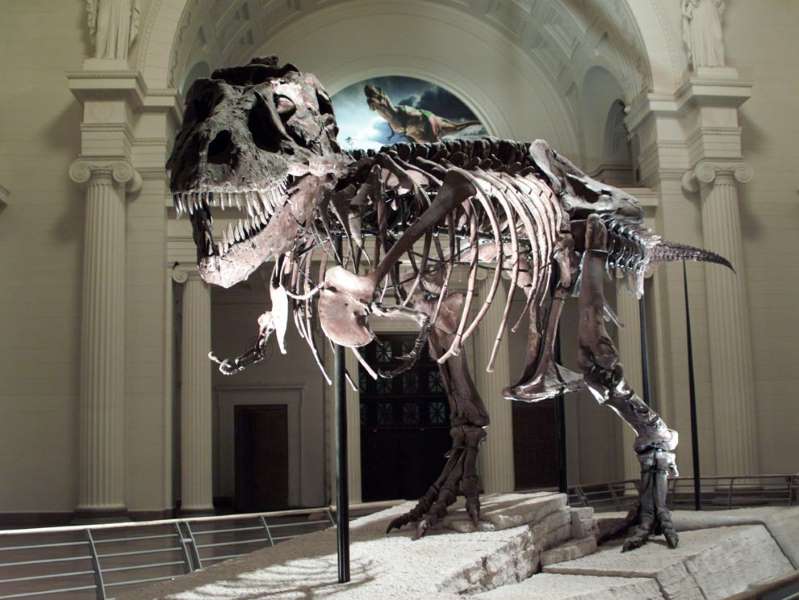
Dinosaurs are dead, but there’s still life inside their bones


One of the tricks you learn hunting dinosaurs in Canada is to look for orange. Dinosaur bones are dull browns, tans, and greys. But in the middle of the drab sandstones of the badlands – a dry landscape where wind and water have worn away much of the rock – you’ll sometimes catch a flash of fluorescent orange. Walk over and you may well find a dinosaur bone weathering out.
The orange is lichen, growing on the bone. The bone gives the lichen a stable foothold in the eroding landscape, it’s porous, storing moisture during droughts, and full of minerals like phosphate, vital to a growing lichen. It’s strange to think that something that died 76m years ago plays a role in modern ecosystems, but life is opportunistic.
Life exists almost everywhere on Earth. Bacteria thrive in hydrothermal vents, fungi grow inside Chernobyl, nematode worms crawl under Antarctic ice fields. Most remarkably, there is the deep biosphere, a vast, subterranean microbial ecosystem starting under our feet and extending into rock kilometres underground. Why wouldn’t life also inhabit buried fossils?
If it does, that creates problems for identifying the original biological material of fossils. That’s where our new research – led by my colleague Evan Saitta of the Field Museum in Chicago – comes in, providing a detailed look at the organic matter found inside dinosaur bones.

A Centrosaurus skull. Nick Longrich, 
It’s clear that the popular concept of fossilization, where the bone is completely mineralized and replaced with new material, is wrong. Most of the original bone mineral – calcium phosphate – survives. It’s the same stuff that was inside a living, breathing dinosaur millions of years ago.
 Remarkably, organic molecules can sometimes persist. Ancient DNA has let us reconstruct genomes of recently extinct species and discover previously unknown species such as our cousins the Denisovans. Ancient proteins have shown the evolutionary history of the extinct mammal Toxodon, and fossil pigments let us put stripes on dinosaurs and speckles on their eggs.
Organic matter taken from a dinosaur fossil. Evan Saitta,

Even more remarkable claims have been announced, including DNA, proteins and even cells and blood vessels from dinosaur bone. But these are more than an order of magnitude older than the oldest confirmed DNA and proteins, so they’ve been disputed. The idea of recovering dinosaur tissues and using dinosaur DNA and proteins to reconstruct evolution is tantalizing. But it’s unclear how, or if, they can survive tens of millions of years.
Half the DNA in a fossil disappears roughly every 500 years and DNA should become unreadable in 1.5m years. Proteins are more resilient. The oldest date to 4m years ago, but the peptide bonds holding a protein’s amino acids together also degrade over time, so it’s unclear if they could survive in 75m year old dinosaur fossils.
Meanwhile, living things – bacteria, protists, fungi, plant roots and nematodes – thrive underground. To be sure we have dinosaur tissues, we first need to exclude other, less exciting possibilities, like contamination by bacterial biofilms.

Microbe hunting

To understand the source of the biological matter inside dinosaur bones, we launched a unique field expedition, not for dinosaurs, but for microbes inside them. We excavated a Centrosaurus bonebed in Dinosaur Provincial Park, Alberta. Sterilizing tools with bleach, alcohol, and a blowtorch, we then wrapped fossils in foil to prevent contamination. But they were still full of life, coming from inside the bone.
Amino acids extracted from the fossils showed the unmistakable signature of life. Amino acids exist in left- and right-handed configurations. Living things make left-handed amino acids, but after death, their structure slowly flips back and forth, creating a mix of left- and right-handed molecules. Ancient amino acids show a 1:1 ratio, but the bones were dominated by left-handed molecules, showing recent biological activity.

We also studied the carbon in the bones. Living things take carbon from atmospheric CO₂, which contains radioactive carbon-14. Carbon-14 undergoes radioactive decay, with half its atoms disappearing roughly every 6,000 years. No detectable carbon-14 should survive from 76m years ago, but the bones were full of it. Either these dinosaurs died a few thousand years ago, or they were contaminated by living things.
To find out what lived in the bones, we extracted DNA and the related molecule RNA from the fossil. What we found was astonishing: a thriving community of bacteria. The bones had 50 times the bacterial DNA as the surrounding mudstones. They weren’t empty tombs, but teeming with a unique microbial community, a microbiome. Bones, unlike rock, have open spaces for marrow, blood vessels and cells, which now create space for microbes, and carry water and nutrients. Bone also contains phosphorus needed to make DNA and cell membranes.
Lichen in Dinosaur Provincial Park, Alberta. Nick Longrich,
 Moreover, organic tissues and vessel-like structures extracted from the bones – similar to those identified elsewhere as dinosaur tissues – glow like a Christmas tree when stained with a flourescent dye that binds to DNA. The abundant DNA suggests these organics are made by bacteria, not dinosaurs.
 Needle in a haystack
Looking for fossil organics is a bit like looking for a needle in a haystack. We haven’t argued that needles don’t exist, but we’ve provided a better idea of how to tell needles from the straw. And although we didn’t find dinosaur proteins, we found something equally remarkable, life inside that dinosaur.
When our Centrosaurus died, its body fed other living things – tyrannosaurs, flies, beetles, then bacteria and fungi. But the process continued long after death. Microbes would have lived in its bones after they were buried under a Cretaceous floodplain, then when the sea rolled in and the dinosaur lay a hundred meters beneath the ocean floor, still later beneath an ice age glacier, and finally, just beneath today’s badlands.
It’s extraordinary to think, but inside the remains of a great dinosaur, tiny microbial worlds appeared, evolved and disappeared over millions of years, in a complex interplay between the living and the long-dead.


dissabte, 3 d’agost del 2019

World War 2 ‘Double Cross’ that ‘diverted bombs from London’ actually made no difference, study shows

Peenemuende, Germany - April 17, 2014: German WW2 V2 rocket in Peenemuende, Germany. From 1943 onwards large numbers of the rocket were manucactured in underground production facilities.
The V-2 was one of the most feared weapons of World War 2 - the first-ever long-range guided missile, which blasted London in the closing days of World War 2.
But a clever deception campaign by British spies to trick the Nazis into missing their targets actually did far less than people believed.
During the war, MI5 used its ‘Double Cross’ agents - German agents in Britain who had been ‘turned’ - to broadcast disinformation on where the rockets were going.
Detonation of the atomic bomb over Nagasaki. 

The spies hoped to convince the Nazis that their rockets were overshooting, thus convincing them to aim the rockets wrongly and miss.
But new research has shown that the rockets were so inaccurate - only striking within 18 miles of their target - that the ruse may not have had much effect. 
Steve Le Comber of Queen Mary, University of London, mapped V2 strikes using ‘geographic profiling’.
(Original Caption) Britain showed her might with a line up of 12 9-2 Howitzers, the biggest line up of guns seen together in this country.
He found that the efforts of MI5 barely affected the targeting of the rockets at all.
Dr Le Comber told the Telegraph, ‘It was one of the most elegant and simple plans ever devised by the security services
'The V-2 rockets were far too fast to be shot down, so MI5 needed a new way of stopping them hitting important and built up areas.'


'When we ran the model the cluster barely moves at all over the four week period.'
The V-2 rocket (and German scientists who had worked on it) helped to launch the space programme in the years after the war.
On October 24, 1946, soldiers and scientists saw the first images of our planet seen from space, taken by a camera mounted on a V-2 rocket.
Loggers working in a river in New Brunswick, Canada. 
The shots were snapped by a 35mm camera mounted on a German-designed V-2 rocket fired from the White Sands Missile Range.

divendres, 2 d’agost del 2019

Spoof or truth? The plucky local reporters who took on the tsar of Russia

‘In September 1898, the Skibbereen Eagle proclaimed it would ‘keep its eye on the Emperor of Russia, and all such despotic enemies of human progression.’ Tsar Nicholas II with his family in 1914.
A few columns ago I cited a story often told among journalists, for fun and to caution against self-importance, usually in vain. Variously attributed to small newspapers in remote locations at some time in the 19th century, an editorial discussing Russian foreign policy is said to have thundered: “We warn the Tsar!”
The source is sometimes said to have been a newspaper in Tasmania, the Mercury, and sometimes a paper in Nelson, New Zealand. In the column I said the story might be apocryphal. As often happens, readers and researchers mobilised, so here is an Update.
The royal couple of russia, tsar nicholas ll and tsarina Alexandra fyodorovna with their son
 One suggested source was the Skibbereen Eagle, in West Cork, Ireland, which proclaimed in a leader published in September 1898 that the paper would “keep its eye on the Emperor of Russia, and all such despotic enemies – whether at home or abroad – of human progression, and man’s natural rights, which undoubtedly include a nation’s claim to self-government”.
Fame attached and endured, so much so that the paper that absorbed the Eagle, the Southern Star, could confidently publish in 1946 a cartoon of Ireland’s then taoiseach, Éamon de Valera, in one-to-one talks with the Soviet dictator Joseph Stalin, who murmurs through pipe smoke: “Between ourselves, Dev, Russia has never quite forgotten that article in the Skibbereen Eagle.”
Three new cardinals designate arrive at Shannon Airport in Limerick, Ireland from America, en route to Rome for the papal consistory, 12th February 1946. From left to right, Dr Thomas Tien Ken-sin (Vicar Apostolic of Qingdao, China), Dr John Joseph Glennon (Archbishop of St Louis), Irish statesman Éamon de Valera (1882 - 1975), Dr Francis Spellman (Archbishop of New York) and David Gray (1870 - 1968), the United States Envoy to Ireland.
Without denying the Eagle’s vision and influence, another source can be proposed. On 30 March 1882, under the headline “The Emperor of Russia Warned”, Melbourne Punch attributed to the “Croajingergoalong Gazette” these words: “For the last time our duty as public journalists calls on us to warn the present Emperor, the Czar of all the Russias, against the course he is deliberately pursuing, ie in endeavouring to destroy the peace of Europe.
In all human probability, that despotic monarch will never see these lines which we now pen, but our duty, as public journalists, demands that we should write them. The pen, a great writer has wisely said, is mightier than the sword, and we feel that the humble nib which we now grasp outweighs the present Emperor’s blade, although he may never know it.”
RUSSIAN EMPIRE - circa 1900: Tsar Nicholas II Romanov. Russia, circa 1900.
It is not conclusive proof of a spoof that this excerpt appeared in a humour journal modelled on London’s Punch. As Private Eye still regularly shows, actual newspapers remain capable of similar grandiloquence.
So, was Melbourne Punch quoting from an actual small-town newspaper? No – the initial clue is in the masthead’s tweak to Croajingolong, a beautiful and remote part of the far south-eastern tip of mainland Australia.
Perhaps it was a fashionable form of mockery in the period, to chide others about their “we warn the tsar” moments. That could explain the cluster.
The plucky Gazette was not deterred. Two copies of the paper would be mailed to the Tsar, “if they are not filched in their passage through the Russian post office”, and although warmongering advisers might “dash the current number of the Croajingergoalong Gazette from His Majesty’s irresolute hand … we may yet hear of him walking into the council of the assembled heads of the nation, and holding the Croajingergoalong Gazette aloft in his hand, ‘There shall be no war; this little print has pointed out to me my duty’.” 

dijous, 1 d’agost del 2019

A surprisingly large asteroid just sneaked up on Earth, and the Sun is to blame

Asteroid
Thanks to powerful telescopes that can detect large objects at extreme distances, we earthlings have a pretty good idea of the space rocks that pose threats to Earth. However, every once in a while nature reminds us that it still has some potentially apocalyptic surprises in store, and that’s exactly what happened yesterday when an asteroid as large as 427 feet across appeared seemingly out of nowhere, speeding past Earth at an alarmingly close distance.
The rock, now named 2019 OK, came within a scant 43,500 miles of Earth, which is far closer than the Moon is to Earth, and astronomers didn’t even know it was there until it was already upon us. The Sun, it turns out, is to blame for our lack of awareness.
The rock’s trajectory put it on a path that sent it straight towards Earth from the direction of the Sun. Because of how bright our host star is, scientists couldn’t spot the asteroid within its intense glare, making it impossible to see it ahead of time. Had it been on a true collision course with Earth, we would have been powerless to stop it.
The rock wasn’t a supersized “planet-killer,” but it would have absolutely done some serious damage if it struck a populated area. Scientists have compared its potential impact force to that of a “very large” nuclear weapon, so to say that we got lucky on this one would be a major understatement.
Asteroids as large as 2019 OK don’t show up in Earth’s immediate vicinity all that often. We do see them from time to time, but such a close pass with absolutely zero warning is indeed incredibly rare. The good news — aside from the obvious fact that it didn’t strike Earth — is that now that astronomers know it exists they can study it and plot its course, giving us a far earlier warning if it ever ends up in our neck of the woods again.

How often should we shower, according to science?

The internet (like Siri) has become an oracle to which millions of people turn every day hoping to resolve their countless doubts. Google kn...