1. The Disappearance
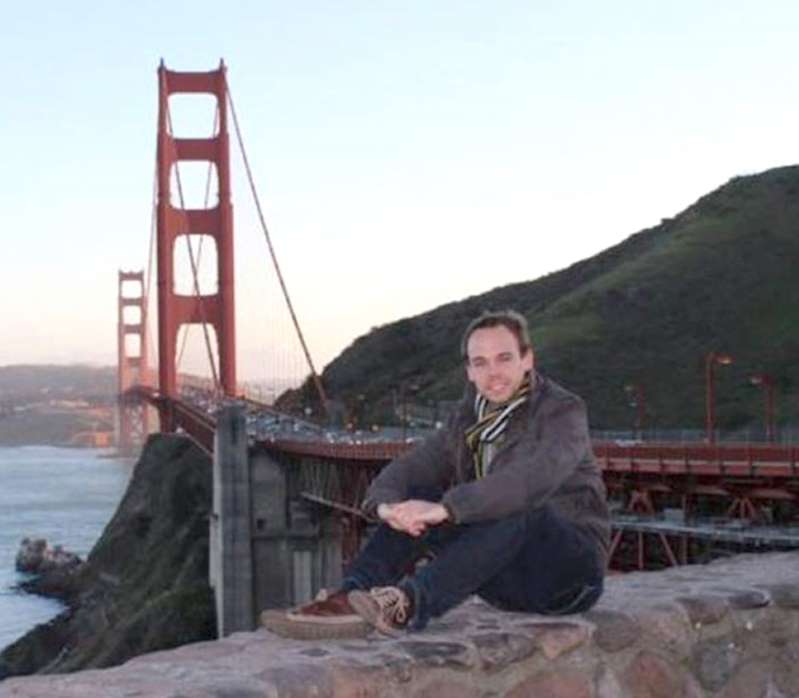
At 12:42 a.m. on the quiet, moonlit night of March 8, 2014, a Boeing 777-200ER operated by Malaysia Airlines took off from Kuala Lumpur and turned toward Beijing, climbing to its assigned cruising altitude of 35,000 feet. The designator for Malaysia Airlines is MH. The flight number was 370. Fariq Hamid, the first officer, was flying the airplane. He was 27 years old. This was a training flight for him, the last one; he would soon be fully certified. His trainer was the pilot in command, a man named Zaharie Ahmad Shah, who at 53 was one of the most senior captains at Malaysia Airlines. In Malaysian style, he was known by his first name, Zaharie. He was married and had three adult children. He lived in a gated development. He owned two houses. In his first house he had installed an elaborate Microsoft flight simulator. He flew it frequently, and often posted to online forums about his hobby. In the cockpit, Fariq would have been deferential to him, but Zaharie was not known for being overbearing.
 |
| MH 370 pilot Zaharie Shah with his home aircraft simulator
|
In the cabin were 10 flight attendants, all of them Malaysian. They had 227 passengers to care for, including five children. Most of the passengers were Chinese; of the rest, 38 were Malaysian, and in descending order the others came from Indonesia, Australia, India, France, the United States, Iran, Ukraine, Canada, New Zealand, the Netherlands, Russia, and Taiwan. Up in the cockpit that night, while First Officer Fariq flew the airplane, Captain Zaharie handled the radios. The arrangement was standard. Zaharie’s transmissions were a bit unusual. At 1:01 a.m. he radioed that they had leveled off at 35,000 feet—a superfluous report in radar-surveilled airspace where the norm is to report leaving an altitude, not arriving at one. At 1:08 the flight crossed the Malaysian coastline and set out across the South China Sea in the direction of Vietnam. Zaharie again reported the plane’s level at 35,000 feet.
Eleven minutes later, as the airplane closed in on a waypoint near the start of Vietnamese air-traffic jurisdiction, the controller at Kuala Lumpur Center radioed, “Malaysian three-seven-zero, contact Ho Chi Minh one-two-zero-decimal-nine. Good night.” Zaharie answered, “Good night. Malaysian three-seven-zero.” He did not read back the frequency, as he should have, but otherwise the transmission sounded normal. It was the last the world heard from MH370. The pilots never checked in with Ho Chi Minh or answered any of the subsequent attempts to raise them.
Primary radar relies on simple, raw pings off objects in the sky. Air-traffic-control systems use what is known as secondary radar. It depends on a transponder signal that is transmitted by each airplane and contains richer information—for instance, the airplane’s identity and altitude—than primary radar does. Five seconds after MH370 crossed into Vietnamese airspace, the symbol representing its transponder dropped from the screens of Malaysian air traffic control, and 37 seconds later the entire airplane disappeared from secondary radar. The time was 1:21 a.m., 39 minutes after takeoff. The controller in Kuala Lumpur was dealing with other traffic elsewhere on his screen and simply didn’t notice. When he finally did, he assumed that the airplane was in the hands of Ho Chi Minh, somewhere out beyond his range.
 |
Almost three years after the disappearance of Malaysia Airlines flight MH370, its underwater search has been suspended, according to a joint statement from Australian, Chinese and Malaysian officials on Jan. 17, 2017. The three countries were leading the search for the flight, which was carrying 239 people on board when it went missing in March 2014. The statement said: "Despite every effort using the best science available, cutting edge technology, as well as modeling and advice from highly skilled professionals who are the best in their field, unfortunately, the search has not been able to locate the aircraft."
(Pictured) Australian and Malaysian officials examine aircraft debris at the Australian Transport Safety Bureau headquarters in Canberra, Australia, July 20, 2016, after it was found on Pemba Island, located near Tanzania, in late June.
|
The Vietnamese controllers, meanwhile, saw MH370 cross into their airspace and then disappear from radar. They apparently misunderstood a formal agreement by which Ho Chi Minh was supposed to inform Kuala Lumpur immediately if an airplane that had been handed off was more than five minutes late checking in. They tried repeatedly to contact the aircraft, to no avail. By the time they picked up the phone to inform Kuala Lumpur, 18 minutes had passed since MH370’s disappearance from their radar screens. What ensued was an exercise in confusion and incompetence. Kuala Lumpur’s Aeronautical Rescue Coordination Centre should have been notified within an hour of the disappearance. By 2:30 a.m., it still had not been. Four more hours elapsed before an emergency response was finally begun, at 6:32 a.m.
At that moment, the airplane should have been landing in Beijing. The search for it was initially concentrated in the South China Sea, between Malaysia and Vietnam. It was an international effort by 34 ships and 28 aircraft from seven different countries. But MH370 was nowhere near there. Within a matter of days, primary-radar records salvaged from air-traffic-control computers, and partially corroborated by secret Malaysian air-force data, revealed that as soon as MH370 disappeared from secondary radar, it turned sharply to the southwest, flew back across the Malay Peninsula, and banked around the island of Penang. From there it flew northwest up the Strait of Malacca and out across the Andaman Sea, where it faded beyond radar range into obscurity. That part of the flight took more than an hour to accomplish and suggested that this was not a standard case of a hijacking. Nor was it like an accident or pilot-suicide scenario that anyone had encountered before. From the start, MH370 was leading investigators in unexplored directions.
 |
| In this July. 20, 2016, file photo released by the Australian Transport Safety Bureau (ATSB), staff examine a piece of aircraft debris at their laboratory in Canberra, Australia. The flap was found in June 2016 by residents on Pemba Island off the coast of Tanzania and officials had previously said it was highly likely to have come from flight MH370. While search crews spent years trawling in futility through a remote patch of the Indian Ocean for the missing Malaysia Airlines Flight 370, people wandering along beaches on the other side of the ocean began spotting debris that washed ashore. Those pieces provided key information and raised questions whether Malaysia, Australia and China - who funded the hunt for the underwater wreckage - missed key opportunities by failing to organize coastal searches for plane parts |
The mystery surrounding MH370 has been a focus of continued investigation and a source of sometimes feverish public speculation. The loss devastated families on four continents. The idea that a sophisticated machine, with its modern instruments and redundant communications, could simply vanish seems beyond the realm of possibility. It is hard to permanently delete an email, and living off the grid is nearly unachievable even when the attempt is deliberate. A Boeing 777 is meant to be electronically accessible at all times. The disappearance of the airplane has provoked a host of theories. Many are preposterous. All are given life by the fact that, in this age, commercial airplanes don’t just vanish.
This one did, and more than five years later its precise whereabouts remain unknown. Even so, a great deal about the disappearance of MH370 has come into clearer view, and reconstructing much of what happened that night is possible. The cockpit voice recorder and the flight-data recorder may never be recovered, but what we still need to know is unlikely to come from the black boxes. Instead, it will have to come from Malaysia.
2. The Beachcomber
On the evening of the airplane’s disappearance, a middle-aged American man named Blaine Gibson was sitting in his late mother’s house in Carmel, California, sorting through her affairs in preparation for selling the property. He heard the news about MH370 on CNN.
Gibson, whom I met recently in Kuala Lumpur, is a lawyer by training. He has lived in Seattle for more than 35 years but spends little time there. His father, who died decades ago, was a World War I veteran who endured a mustard-gas attack in the trenches, received a Silver Star for gallantry, and went on to serve as the chief justice of California for more than 24 years. His mother was a graduate of Stanford Law School and an ardent environmentalist.
Gibson was an only child. His mother liked to travel internationally, and she took him with her. At the age of 7 he decided that his life’s goal would be to visit every country in the world at least once. Ultimately this challenged the definitions of visit and country, but he stuck with the mission, forgoing any chance of a sustained career and subsisting on a modest inheritance. By his own account, along the way he dabbled in some famous mysteries—the end of the Mayan civilization in the jungles of Guatemala and Belize, the Tunguska meteor explosion in eastern Siberia, and the location of the Ark of the Covenant in the mountains of Ethiopia. He printed up cards identifying himself: adventurer. explorer. truth seeker. He wore a fedora, like Indiana Jones. When news arrived of MH370’s disappearance, he was predisposed to pay attention.
 |
|
A man with a painted face attend the Day of Remembrance for MH370 event in Kuala Lumpur, in 2017. |
Despite reflexive denials by Malaysian officials, and outright obfuscation by the Malaysian air force, the truth about the airplane’s strange flight path quickly began to emerge. It turned out that MH370 had continued to link up intermittently with a geostationary Indian Ocean satellite operated by Inmarsat, a commercial vendor in London, for six hours after the airplane disappeared from secondary radar. This meant that the airplane had not suddenly suffered some catastrophic event. During those six hours it is presumed to have remained in high-speed, high-altitude cruising flight. The Inmarsat linkups, some of them known as “handshakes,” were electronic blips: routine connections that amounted to the merest whisper of communication, because the intended contents of the system—passenger entertainment, cockpit texts, automated maintenance reports—had been isolated or switched off. All told, there were seven linkups: two initiated automatically by the airplane, and five others initiated automatically by the Inmarsat ground station. There were also two satellite-phone calls; they went unanswered but provided additional data. Associated with most of these connections were two values that Inmarsat had only recently begun to log.
The first and more accurate of the values is known as the burst-timing offset, or what I will call the “distance value.” It is a measure of the transmission time to and from the airplane, and therefore of the plane’s distance from the satellite. It does not pinpoint a single location but rather all equidistant locations—a roughly circular set of possibilities. Given the range limits of MH370, the near-circles can be reduced to arcs. The most important arc is the seventh and last one—defined by a final handshake tied in complex ways to fuel exhaustion and the failure of the main engines. The seventh arc stretches from Central Asia in the north to the vicinity of Antarctica in the south. It was crossed by MH370 at 8:19 a.m., Kuala Lumpur time. Calculations of likely flight paths place the airplane’s intersection with the seventh arc—and therefore its end point—in Kazakhstan if the airplane turned north, or in the southern Indian Ocean if it turned south.
Technical analysis indicates with near certainty that the airplane turned south. We know this from Inmarsat’s second logged value—the burst-frequency offset. For the sake of simplicity, I will refer to this value as the “Doppler value,” because it includes, most crucially, a measure of radio-frequency Doppler shifts associated with high-speed movement in relation to satellite position, and is a natural part of satellite communications for airplanes in flight. Doppler shifts have to be predicted and compensated for by airborne systems in order for satellite communications to function. But the compensation is not quite perfect, because satellites—particularly as they age—do not transmit signals in precisely the way airplanes have been programmed to expect. Their orbits may tilt slightly. They are also affected by temperature. These imperfections leave telltale traces. Although Doppler-shift logs had never been used before to determine the location of an airplane, Inmarsat technicians in London were able to discern a significant distortion suggesting a turn to the south at 2:40 a.m. The turn point was a bit north and west of Sumatra, the northernmost island of Indonesia. It has been assumed, at some analytical risk, that the airplane then flew straight and level for a very long while in the general direction of Antarctica, which lay beyond its range.
After six hours, the Doppler data indicated a steep descent—as much as five times greater than a normal descent rate. Within a minute or two of crossing the seventh arc, the plane dived into the ocean, possibly shedding components before impact. Judging from the electronic evidence, this was not a controlled attempt at a water landing. The airplane must have fractured instantly into a million pieces. But no one knew where the impact had occurred, much less why. And no one had the slightest bit of physical evidence to confirm that the satellite interpretations were correct.

Less than a week after the disappearance, The Wall Street Journal published the first report about the satellite transmissions, indicating that the airplane had most likely stayed aloft for hours after going silent. Malaysian officials eventually admitted that the account was true. The Malaysian regime was said to be one of the most corrupt in the region. It was also proving itself to be furtive, fearful, and unreliable in its investigation of the flight. Accident investigators dispatched from Europe, Australia, and the United States were shocked by the disarray they encountered. Because the Malaysians withheld what they knew, the initial sea searches were concentrated in the wrong place—the South China Sea—and found no floating debris. Had the Malaysians told the truth right away, such debris might have been found and used to identify the airplane’s approximate location; the black boxes might have been recovered. The underwater search for them ultimately centered on a narrow swath of ocean thousands of miles away. But even a narrow swath of the ocean is a big place. It took two years to find the black boxes from Air France 447, which crashed into the Atlantic on a flight from Rio de Janeiro to Paris in 2009—and the searchers had known exactly where to look.
The initial search of surface waters ended in April 2014, after nearly two months of futile efforts, and the focus shifted to the ocean depths, where it remains today. Blaine Gibson followed the frustration at first from a distance. He sold his mother’s house and moved to the Golden Triangle of northern Laos, where he and a business partner set about building a restaurant on the Mekong River. He joined a Facebook discussion group dedicated to the loss of MH370. It was filled with speculation, but also with news that reflected useful thinking about what could have happened to the airplane and where the main wreckage might be found.
Although the Malaysians were nominally in charge of the entire investigation, they lacked the means and expertise to mount a subsea search-and-recovery effort; the Australians, as good international citizens, took the lead. The areas of the Indian Ocean that the satellite data pointed to—about 1,200 miles southwest of Perth—were so deep and unexplored that the first challenge was to map the undersea topography sufficiently to allow side-scanning sonar vehicles to be safely towed miles beneath the surface. The ocean floor was lined with ridges in a blackness where light had never penetrated.
Gibson began to wonder whether, for all the strenuous underwater searching, debris from the airplane might someday simply wash up on a beach somewhere. While visiting friends on the coast of Cambodia, he asked whether they had stumbled on anything. They had not. Debris couldn’t possibly have drifted to Cambodia from the southern Indian Ocean, but until the airplane’s wreckage was found—proving that the southern Indian Ocean was indeed its grave—Gibson was determined to keep an open mind.
 |
| Relatives of passengers onboard the missing Malaysia Airlines Flight 370 demand for the Chinese government to continue the search with banners with the words "Don't Give Up" |
In March 2015, a one-year commemoration of MH370’s disappearance was held in Kuala Lumpur by the passengers’ next of kin. Uninvited, and largely unknown to them, Gibson decided to attend. Because he had no special knowledge to offer, his arrival raised eyebrows. People don’t know what to make of a dilettante. The commemoration took place in an outdoor space at a shopping mall, a typical event venue for Kuala Lumpur. The purpose was to grieve collectively, but also to maintain pressure on the government of Malaysia to provide explanations. Hundreds of people attended, many from China. There was a bit of music on a stage. In the background a large poster showed the silhouette of a Boeing 777, along with the words where, who, why, when, whom, how, and also impossible, unprecedented, vanished, and clueless. The principal speaker was a young Malaysian woman named Grace Subathirai Nathan, whose mother had been on the flight. Nathan is a criminal-defense lawyer specializing in death-penalty cases, of which Malaysia has many because of draconian laws. She had emerged as the most effective representative of the next of kin. She took to the stage wearing an oversize T-shirt printed with a cartoon graphic of MH370 and the exhortation search on, and then proceeded to describe her mother, the deep love she felt for her, and the difficulty of enduring her disappearance. On occasion she quietly wept, as did some in the audience, including Gibson. Afterward, he approached Nathan and asked whether she would accept a hug from a stranger. She did, and they became friends.
Gibson left the commemoration determined to help by addressing a gap he had perceived—the lack of coastal searches for floating debris. This would be his niche. He would become MH370’s private beachcomber. The official investigators, primarily Australian and Malaysian, were heavily invested in their underwater search. They would have scoffed at Gibson’s ambition, just as they would have scoffed at the prospect that on beaches hundreds of miles apart, Gibson would find pieces of the airplane.
 |
| Left : The Malaysian lawyer and activist Grace Subathirai Nathan, whose mother was on board MH370. Right : Blaine Gibson, an American who has mounted a search for debris from the airplane. |
3. The Mother Lode
The Indian Ocean washes against tens of thousands of miles of coastline, depending on how many islands you include in your count. When Blaine Gibson started looking for debris, he did not have a plan. He flew to Myanmar because he had been intending to go there anyway, then went to the coast and asked some villagers where flotsam tended to drift ashore. They directed him to several beaches, and a fisherman took him there by boat. He found some debris, but nothing that came from an airplane. He advised the villagers to be on the lookout, left his contact number, and moved on. Similarly, he visited the Maldives and the islands of Rodrigues and Mauritius without finding debris of interest. Then came July 29, 2015. About 16 months after the airplane went missing, a municipal beach-cleanup crew on the French island of Réunion
came upon a torn piece of airfoil about six feet long that seemed to have just washed ashore. The foreman of the crew, a man named Johnny Bègue, realized that it might have come from an airplane, but he had no idea which one. He briefly considered making it into a memorial—setting it on an adjacent lawn and planting some flowers around it—but instead he called a local radio station with the news. A team of gendarmes showed up and took the piece away. It was quickly determined to be a part of a Boeing 777, a control surface called a flaperon that is attached to the trailing edge of the wings. Subsequent examination of serial numbers showed that
it had come from MH370.
Here was the necessary physical evidence of what had already been electronically surmised—that the flight had ended violently in the Indian Ocean, albeit somewhere still unknown and thousands of miles to the east of Réunion. The families of those aboard the airplane had to surrender any fantasies that their loved ones might still be alive. It came as a shock, no matter how rational and realistic they had been. Grace Nathan was devastated. She told me that she could barely function for weeks after the flaperon was found.
Gibson flew to Réunion and found Johnny Bègue on his beach. Bègue was friendly. He showed Gibson where he had found the flaperon. Gibson poked around for other debris but without expectation, because the French government had already mounted a follow-up search to no avail. Flotsam takes a while to drift across the Indian Ocean, moving from east to west at the low southern latitudes, and a flaperon might arrive sooner than other debris because parts of it could rise above the water and act as a sail.

A newspaper reporter in Réunion interviewed Gibson for a story about the visit of this independent American investigator. Gibson wore a search on T-shirt for the occasion. He then flew to Australia, where he spoke with two oceanographers—Charitha Pattiaratchi, of the University of Western Australia at Perth, and David Griffin, who worked for a government research center in Hobart and had been assigned to advise the Australian Transport Safety Bureau, the lead agency in the search for MH370. Both men were experts on Indian Ocean currents and winds. Griffin in particular had spent years tracking drift buoys, and had launched an effort to model the complex drift characteristics of the flaperon during its voyage to Réunion—the hope being to backtrack and narrow the geographic scope of the undersea search. Gibson’s needs were easier to handle: He wanted to know the most likely locations for floating debris to come ashore. The answer was the northeast coast of Madagascar and, to a lesser degree, the coast of Mozambique.
Gibson opted for Mozambique because he had not been there before and could bag it as his 177th country. He chose a town called Vilanculos, because it seemed safe and had nice beaches. He got there in February 2016. As he recalls, he asked for advice from local fishermen, and was told of a sandbank called Paluma that lay beyond a reef, where fishermen would go to collect nets and buoys that washed in from the Indian Ocean. Gibson paid a boatman named Suleman to take him there. They found all sorts of junk, mostly plastic. Suleman called Gibson over. Holding up a gray triangular scrap about two feet across, he asked, “Is this 370?” The scrap had a honeycomb structure and the stenciled words no step on one surface. Gibson’s first impression was that it could not have come from a large airplane. To me he said, “So my mind was telling me it’s not from the plane, but my heart was telling me it’s from the plane. Then we had to take the boat back. And here we get into the personal thing. Two dolphins appeared and helped lead us off that sandbank—my mother’s spirit animal. When I saw those dolphins, I thought, This is from the plane.”
Make of that what you will, but Gibson turned out to be right. The scrap—from a horizontal-stabilizer panel—was determined to almost certainly be from MH370. Gibson flew to the capital, Maputo, and handed the debris to the Australian consul. Then he flew to Kuala Lumpur, just in time for the second-anniversary commemoration. This time he was welcomed as a friend.
 |
| In this March 6, 2016, file photo, well wishes are written on a wall of hope during a remembrance event for the ill fated Malaysia Airlines Flight 370 in Kuala Lumpur, Malaysia . |
In June 2016, Gibson turned his attention to the remote northeastern shores of Madagascar. This turned out to be the mother lode. Gibson says he found three pieces on the first day, and another two a few days later. The following week, on a beach eight miles away, three more pieces were delivered to him. And so it has gone ever since. Word has gotten around that he will pay for MH370 debris. He says he once paid so much for a piece—$40—that an entire village went on a day-long bender. Apparently the local rum is cheap.
A lot of debris washed up that had nothing to do with the airplane. But of the several dozen pieces that have been identified to date as certain or likely or suspected to have come from MH370, Gibson has been responsible for the discovery of roughly a third. Some pieces are still being investigated. Gibson’s influence has been so large that David Griffin, though grateful to him, has worried that the perceived debris pattern may now be statistically skewed toward Madagascar, perhaps at the expense of points farther north. He has given this worry a name: “The Gibson Effect.”
The fact remains that, after five years, no one has yet been able to work backwards from where the debris has washed ashore and trace it to some point of origin in the southern Indian Ocean. In his insistence on maintaining an open mind, Gibson still holds out the hope of finding new debris that will explain the disappearance—charred wiring indicating a fire, for instance, or shrapnel-peppered evidence of a missile strike—although what is known about the flight’s final hours largely precludes such possibilities. What Gibson’s discovery of so many bits of debris has confirmed is that the signals analysis was correct. The airplane flew for six hours until the flight came suddenly to an end. There was no effort by someone at the controls to bring the airplane down gently. It shattered. There is still a chance, Gibson thinks, of finding the equivalent of a message in a bottle—a note of desperation scribbled by someone in his or her last moments on the doomed airplane. On the beaches, Gibson has found a few backpacks and a large number of purses, all of which have been empty. The closest he has come to finding such a note, he says, was a message written in Malay on the underside of a baseball cap. Translated, it read, “To whom it may concern. My dear friend, meet me at the guesthouse later.”

A—1:21 a.m., March 8, 2014: Over the South China Sea, near a navigational waypoint between Malaysia and Vietnam, MH370 drops from air-traffic-control radar and turns southwest, back across the Malay Peninsula.
B—Roughly an hour later:
After flying northwest above the Strait of Malacca, the airplane makes what investigators call the “final major turn” and heads south. The turn and the new course are later reconstructed from satellite data.
C—April 2014:
 |
| Illustrations by La Tigre
|
The surface search is abandoned and a deep-ocean search gets under way. Analysis of satellite data had located MH370’s final electronic “handshake” along an arc.
D—July 2015:
The first piece of debris from MH370—a flaperon—is discovered on the island of Réunion. Other confirmed or likely pieces have been found on widely dispersed beaches in the western Indian Ocean (locations in red).
4. The Conspiracies
Three official investigations were launched in the wake of MH370’s disappearance. The first was the largest, most rigorous, and most expensive: the technically advanced Australian underwater-search effort, which was focused on locating the main debris in order to retrieve the airplane’s flight-data and cockpit voice recorders. It involved calculations of aircraft performance, the parsing of radar and satellite records, studies of oceanic drift, doses of statistical analysis, and the physical examination of the East African flotsam—much of which came from Blaine Gibson. It required heavy maritime operations in some of the world’s roughest seas. Assisting the effort was a collection of volunteer engineers and scientists who found one another on the internet, called themselves the Independent Group, and collaborated so effectively that the Australians took their work into account and ended up formally thanking them for their insights. In the annals of accident investigation, this had never happened before. Nonetheless, after more than three years and about $160 million, the Australian investigation closed without success. It was picked up in 2018 by an American company called Ocean Infinity, under contract with the Malaysian government on a “no-find, no-fee” basis. This search used advanced underwater-surveillance vehicles and covered a new section of the seventh arc, a section deemed most likely by the Independent Group to bring results. After a few months, it too ended in failure.
The second official investigation belonged to the Malaysian police, and amounted to background checks of everyone on the airplane as well as some of their friends. It is hard to know the true extent of the police discoveries, because the report that resulted from the investigation stopped short of full disclosure. The report was stamped secret and withheld even from other Malaysian investigators, but after it was leaked by someone on the inside, its inadequacies became clear. In particular, it held back on divulging all that was known about the captain, Zaharie. No one was surprised. The prime minister at the time was a nasty man named Najib Razak, who was alleged to be monumentally corrupt. The press in Malaysia was censored. Troublemakers were being picked up and made to disappear. Officials had reason for caution. They had careers to protect, and maybe their lives. It is obvious that decisions were made to not pursue certain avenues that might have reflected poorly on Malaysia Airlines or the government.
 |
| In this March 22, 2014, file photo |
The third official investigation was the accident inquiry, intended not to adjudicate liability but to find probable cause, and to be conducted according to the highest global standards by an international team. It was led by an ad hoc working group assembled by the Malaysian government, and was a mess from its inception. The police and military disdained it. Government ministers saw it as a risk. Foreign specialists who were sent to assist began retreating almost as soon as they arrived. An American expert, referring to the international aviation protocol that is supposed to govern accident inquiries, told me, “Annex 13 is tailored for accident investigations in confident democracies, but in countries like Malaysia, with insecure and autocratic bureaucracies, and with airlines that are either government-owned or seen as a matter of national prestige, it always makes for a pretty poor fit.”
A close observer of the MH370 process said, “It became clear that the primary objective of the Malaysians was to make the subject just go away. From the start there was this instinctive bias against being open and transparent, not because they were hiding some deep, dark secret, but because they did not know where the truth really lay, and they were afraid that something might come out that would be embarrassing. Were they covering up? Yes. They were covering up for the unknown.”
In the end the investigation produced a 495-page report in weak imitation of Annex 13 requirements. It was stuffed with boilerplate descriptions of 777 systems that had clearly been lifted from Boeing manuals and were of no technical value. Indeed, nothing in the report was of technical value, since Australian publications had already fully covered the relevant satellite information and ocean-drift analysis. The Malaysian report was seen as hardly more than a whitewash whose only real contribution was a frank description of the air-traffic-control failures—presumably because half of them could be blamed on the Vietnamese, and because the Malaysian controllers constituted the weakest local target, politically. The report was released in July 2018, more than four years after the event. It stated that the investigative team was unable to determine the cause of the airplane’s disappearance.
 |
|
Sakinab Shah, sister of Capt. Zaharie Ahmad Shah, the senior pilot of Malaysian Flight 370 that mysteriously , holds up her mobile phone with the latest picture of her brother during an interview at her house in Kuala Lumpur, Malaysia. Australian officials confirmed on Thursday, July 28, 2016 that data recovered from a home flight simulator owned by the captain of Malaysia Airlines Flight 370 showed that someone had used the device to plot a course to the southern Indian Ocean, where the missing jet is believed to have crashed |
Such a conclusion invites continued speculation, even if it is unwarranted. The satellite data provide the best evidence of the airplane’s flight path, and are hard to argue with, but people have to have trust in numbers to accept the story they tell. All sorts of theorists have made claims, amplified by social media, that ignore the satellite data, and in some cases also the radar tracks, the aircraft systems, the air-traffic-control record, the physics of flight, and the basic contours of planetary geography. For example, a British woman who blogs under the name of Saucy Sailoress and does Tarot readings for hire was vagabonding around southern Asia with her husband and dogs in an oceangoing sailboat. She says that on the night MH370 disappeared they were in the Andaman Sea, and she spotted what looked like a cruise missile coming at her. The missile morphed into a low-flying airplane with a well-lit cockpit, bathed in a strange orange glow and trailing smoke. As it flew by she concluded that it was on a suicide mission against a Chinese naval fleet farther out to sea. She did not yet know about the disappearance of MH370, but when, a few days later, she learned of it she drew what was to her the obvious connection. Implausible, perhaps, but she gained an audience.
An Australian has been claiming for several years to have found MH370 by means of Google Earth, in shallow waters and intact; he has refused to disclose the location while he works on crowdfunding an expedition. On the internet you will find claims that the airplane has been found intact in the Cambodian jungle, that it was seen landing in an Indonesian river, that it flew into a time warp, that it was sucked into a black hole. One scenario has the airplane flying off to attack the American military base on Diego Garcia before getting shot down. A recent online report that Captain Zaharie had been discovered alive and was lying in a Taiwanese hospital with amnesia won sufficient acceptance that Malaysia angrily denied it. The news had come from a crudely satirical website that also reported a sexual assault on an American trekker and two Sherpas by a yeti-like creature in Nepal.
A New York–based writer named Jeff Wise has hypothesized that one of the electronic systems on board the airplane may have been reprogrammed to provide false data—indicating a turn south into the Indian Ocean when in fact the airplane turned north toward Kazakhstan—in order to lead investigators astray. He calls this the “spoof” scenario, and has elaborated extensively on it, most recently in a 2019 ebook. He proposes that the Russians might have stolen the airplane to create a distraction from the annexation of Crimea, then under way. An obvious weak spot in the argument is the need to explain how, if the airplane was flown to Kazakhstan, all that wreckage ended up in the Indian Ocean. Wise’s answer is that it was planted.
Blaine Gibson was new to social media when he started his search, and he was in for a surprise. As he recalls, the trolls emerged as soon as he found his first piece—the one labeled no step—and they multiplied afterward, particularly as the beaches of Madagascar began to bear fruit. The internet provokes emotion even in response to unremarkable events. A catastrophe taps into something toxic. Gibson was accused of exploiting the families and of being a fraud, a publicity hound, a drug addict, a Russian agent, an American agent, and at the very least a dupe. He began receiving death threats—messages on social media and phone calls to friends predicting his demise. One message said that either he would stop looking for debris or he would leave Madagascar in a coffin. Another warned that he would die of polonium poisoning. There were more. He was not prepared for this, and was incapable of shrugging it off. During the days I spent with him in Kuala Lumpur, he kept abreast of the latest attacks with the assistance of a friend in London. He said, “I once made the mistake of going on Twitter. Basically, these people are cyberterrorists. And it works. It’s effective.” He has been traumatized.
In 2017, Gibson arranged a formal mechanism for the transfer of debris: He would turn over any new find to authorities in Madagascar, who would hand it to Malaysia’s honorary consul, who would pack it up and ship it to Kuala Lumpur for examination and storage. On August 24 of that year, the honorary consul was gunned down in his car by an assassin who escaped on a motorcycle and has never been found. A French-language news account alleged that the consul had a shady past; his killing may have had no connection to MH370 at all. Gibson, however, has assumed that there is a connection. A police investigation is ongoing.
 |
| The first scrap of debris found by Blaine Gibson, from a horizontal-stabilizer panel, was recovered on a sandbank off the coast of Mozambique in February 2016. |
By now he largely avoids disclosing his location or travel plans, and for similar reasons avoids using email and rarely speaks over the telephone. He likes Skype and WhatsApp for their encryption. He frequently swaps out his SIM cards. He believes he is sometimes followed and photographed. There is no arguing that Gibson is the only person who has gone out looking for pieces of MH370 on his own and found debris. But the idea that the debris is worth killing for is hard to take seriously. It would be easier to believe if the debris held clues to dark secrets and international intrigue. But the evidence—much of it now out in the open—points in a different direction.
5. The Possibilities
In truth, a lot can now be known with certainty about the fate of MH370. First, the disappearance was an intentional act. It is inconceivable that the known flight path, accompanied by radio and electronic silence, was caused by any combination of system failure and human error. Computer glitch, control-system collapse, squall lines, ice, lightning strike, bird strike, meteorite, volcanic ash, mechanical failure, sensor failure, instrument failure, radio failure, electrical failure, fire, smoke, explosive decompression, cargo explosion, pilot confusion, medical emergency, bomb, war, or act of God—none of these can explain the flight path.
Second, despite theories to the contrary, control of the plane was not seized remotely from within the electrical-equipment bay, a space under the forward galley. Pages could be spent explaining why. Control was seized from within the cockpit. This happened in the 20-minute period from 1:01 a.m., when the airplane leveled at 35,000 feet, to 1:21 a.m., when it disappeared from secondary radar. During that same period, the airplane’s automatic condition-reporting system transmitted its regular 30-minute update via satellite to the airline’s maintenance department. It reported fuel level, altitude, speed, and geographic position, and indicated no anomalies. Its transmission meant that the airplane’s satellite-communication system was functioning at that moment.
By the time the airplane dropped from the view of secondary—transponder-enhanced—radar, it is likely, given the implausibility of two pilots acting in concert, that one of them was incapacitated or dead, or had been locked out of the cockpit. Primary-radar records—both military and civilian—later indicated that whoever was flying MH370 must have switched off the autopilot, because the turn the airplane then made to the southwest was so tight that it had to have been flown by hand. Circumstances suggest that whoever was at the controls deliberately depressurized the airplane. At about the same time, much if not all of the electrical system was deliberately shut down. The reasons for that shutdown are not known. But one of its effects was to temporarily sever the satellite link.
 |
|
Students from an international school in east China city Zhuji pray for the passengers onboard Malaysia Airlines flight MH370 by lighting candles on March 10, 2014 in Zhuji, China. Malaysia Airline flight MH370 from Kuala Lumpur to Beijing and carrying 239 onboard was reported missing after the crew failed to check in as scheduled while flying over waters between Malaysia and Ho Chi Minh City in Vietnam. |
An electrical engineer in Boulder, Colorado, named Mike Exner, who is a prominent member of the Independent Group, has studied the radar data extensively. He believes that during the turn, the airplane climbed up to 40,000 feet, which was close to its limit. During the maneuver the passengers would have experienced some g‑forces—that feeling of being suddenly pressed back into the seat. Exner believes the reason for the climb was to accelerate the effects of depressurizing the airplane, causing the rapid incapacitation and death of everyone in the cabin.
An intentional depressurization would have been an obvious way—and probably the only way—to subdue a potentially unruly cabin in an airplane that was going to remain in flight for hours to come. In the cabin, the effect would have gone unnoticed but for the sudden appearance of the drop-down oxygen masks and perhaps the cabin crew’s use of the few portable units of similar design. None of those cabin masks was intended for more than about 15 minutes of use during emergency descents to altitudes below 13,000 feet; they would have been of no value at all cruising at 40,000 feet. The cabin occupants would have become incapacitated within a couple of minutes, lost consciousness, and gently died without any choking or gasping for air. The scene would have been dimly lit by the emergency lights, with the dead belted into their seats, their faces nestled in the worthless oxygen masks dangling on tubes from the ceiling.
The cockpit, by contrast, was equipped with four pressurized-oxygen masks linked to hours of supply. Whoever depressurized the airplane would have simply had to slap one on. The airplane was moving fast. On primary radar it appeared as an unidentified blip approaching the island of Penang at nearly 600 miles an hour. The mainland nearby is home to Butterworth Air Base, where a squadron of Malaysian F-18 interceptors is stationed, along with an air-defense radar—not that anyone was paying attention. According to a former official, before the accident report was released last summer, Malaysian air-force officers demanded to review and edit it. In a section called “Malaysian Military Radar,” the report provides a timeline suggesting that the air-defense radar had been actively monitored, that the military was well aware of the identity of the aircraft, and that it purposefully “did not pursue to intercept the aircraft since it was ‘friendly’ and did not pose any threat to national airspace security, integrity and sovereignty.” The question of course is why, if the military knew the airplane had turned around and was flying west, it then allowed the search to continue for days in the wrong body of water, to the east.
For all its expensive equipment, the air force had failed at its job and could not bring itself to admit the fact. In an Australian television interview, the former Malaysian defense minister said, “If you’re not going to shoot it down, what’s the point in sending [an interceptor] up?” Well, for one thing, you could positively identify the airplane, which at this point was just a blip on primary radar. You could also look through the windows into the cockpit and see who was at the controls.
At 1:37 a.m., MH370’s regularly scheduled 30-minute automatic condition-reporting system failed to transmit. We now know that the system had been isolated from any satellite transmission—something easily done from within the cockpit—and therefore could not send out any of its scheduled reports.
At 1:52 a.m., half an hour into the diversion, MH370 passed just south of Penang Island, made a wide right turn, and headed northwest up the Strait of Malacca. As the airplane turned, the first officer’s cellphone registered with a tower below. It was a single brief connection, during which no content was transmitted. Eleven minutes later, on the assumption that MH370 was still over the South China Sea, a Malaysia Airlines dispatcher sent a text message instructing the pilots to contact Ho Chi Minh’s air-traffic-control center. The message went unanswered. All through the Strait of Malacca, the airplane continued to be hand-flown. It is presumed that everyone in the cabin was dead by this point. At 2:22 a.m., the Malaysian air-force radar picked up the last blip. The airplane was 230 miles northwest of Penang, heading northwest into the Andaman Sea and flying fast.
Three minutes later, at 2:25, the airplane’s satellite box suddenly returned to life. It is likely that this occurred when the full electrical system was brought back up, and that the airplane was repressurized at the same time. When the satellite box came back on, it sent a log-on request to Inmarsat; the ground station responded, and the first linkup was accomplished. Unbeknownst to anyone in the cockpit, the relevant distance and Doppler values were recorded at the ground station, later allowing the first arc to be established. A few minutes later a dispatcher put in a phone call to the airplane. The satellite box accepted the link, but the call went unanswered. An associated Doppler value showed that the airplane had just made a wide turn to the south. To investigators, the place where this happened became known as the “final major turn.” Its location is crucial to all the efforts that have followed, but it has never quite been pinned down. Indonesian air-defense radar should have shown it, but the radar seems to have been turned off for the night.
MH370 was now most likely flying on autopilot, cruising south into the night. Whoever was occupying the cockpit was active and alive. Was this a hijacking? A hijacking is the “third party” solution favored in the official report. It is the least painful explanation for anyone in authority that night. It has immense problems, however. The main one is that the cockpit door was fortified, electrically bolted, and surveilled by a video feed that the pilots could see. Also, less than two minutes passed between Zaharie’s casual “good night” to the Kuala Lumpur controller and the start of the diversion, with the attendant loss of the transponder signal. How would hijackers have known to make their move precisely during the handoff to Vietnamese air traffic control, and then gained access so quickly and smoothly that neither of the pilots had a chance to transmit a distress call? It is possible of course that the hijackers were known to the pilots—that they were invited into the cockpit—but even that does not explain the lack of a radio transmission, particularly during the hand-flown turn away from Beijing. Both of the control yokes had transmitter switches, within the merest finger reach, and some signal could have been sent in the moments before an attempted takeover. Furthermore, every one of the passengers and cabin-crew members has been investigated and cleared of suspicion by teams of Malaysian and Chinese investigators aided by the FBI. The quality of that police work is open to question, but it was thorough enough to have uncovered the identities of two Iranians who were traveling under false names with stolen passports—seeking, however, nothing more nefarious than political asylum in Germany. It is possible that stowaways—by definition unrecorded on the airplane’s manifest—had hidden in the equipment bay. If so, they would have had access to two circuit breakers that, if pulled, would have unbolted the cockpit door. But that scenario has problems, too. The bolts click loudly when they open—an unambiguous sound that would have been familiar to the pilots. The hijackers would then have had to open a galley-floor hatch from below, climb a short ladder, evade notice by the cabin crew, evade the surveillance video, and enter the cockpit before either of the pilots transmitted a distress call. It is unlikely that this could have happened, just as it is unlikely that a flight attendant held hostage could have used the door keypad to allow sudden entry without firing off a warning. Furthermore, what would the purpose be of a hijacking? Money? Politics? Publicity? An act of war? A terrorist attack? The intricate seven-hour profile of MH370’s deviation into oblivion fits none of these scenarios. And no one has claimed responsibility for the act. Anonymity is not consistent with any of these motives.
6. The Captain
 |
| In this photo released Friday, Sept. 16, 2016, by the Australian Transport Safety Bureau (ATSB), staff examine a piece of aircraft debris at their laboratory in Canberra, Australia, July. 20, 2016. The flap was found in June by residents on Pemba Island off the coast of Tanzania and officials had previously said it was highly likely to have come from flight MH370. An analysis by experts at the Australian Transport Safety Bureau, which is heading up the search for the plane, subsequently confirmed the part was indeed from the missing Boeing 777 aircraft, the agency said in a statement. |
This leaves us with a different sort of event, a hijacking from within where no forced entry is required—by a pilot who runs amok. Reasonable people may resist the idea that a pilot would murder hundreds of innocent passengers as the collateral price of killing himself. The definitive response is that this has happened before. In 1997, a captain working for an Indonesian airline called SilkAir is believed to have disabled the black boxes of a Boeing 737 and to have plunged the airplane at supersonic speeds into a river. In 1999, EgyptAir Flight 990 was deliberately crashed into the sea by its co-pilot off the coast of Long Island, resulting in the loss of everyone on board. In 2013, just months before MH370 disappeared, the captain of LAM Mozambique Airlines Flight 470 flew his Embraer E190 twin jet from cruising altitude into the ground, killing all 27 passengers and all six crew members. The most recent case is the Germanwings Airbus that was deliberately crashed into the French Alps on March 24, 2015, also causing the loss of everyone on board. Its co-pilot, Andreas Lubitz, had waited for the pilot to use the bathroom and then locked him out. Lubitz had a record of depression and—as investigations later discovered—had made a study of MH370’s disappearance, one year earlier.
In the case of MH370, it is difficult to see the co-pilot as the perpetrator. He was young and optimistic, and reportedly planning to get married. He had no history of any sort of trouble, dissent, or doubts. He was not a German signing on to a life in a declining industry of budget airlines, low salaries, and even lower prestige. He was flying a glorious Boeing 777 in a country where the national airline and its pilots are still considered a pretty big deal.
It is the captain, Zaharie, who raises concerns. The first warning is his portrayal in the official reports as someone beyond reproach—a good pilot and placid family man who liked to play with a flight simulator. This is the image promoted by Zaharie’s family, but it is contradicted by multiple indications of trouble that too obviously have been brushed over.
The police discovered aspects of Zaharie’s life that should have caused them to dig more deeply. The formal conclusions they drew were inadequate. The official account, referring to Zaharie as the PIC, or pilot in command, had this to say:
The PIC’s ability to handle stress at work was reported to be good. There was no known history of apathy, anxiety, or irritability. There were no significant changes in his lifestyle, interpersonal conflict, or family stresses … There were no behavioral signs of social isolation, change of habits or interest … On studying the PIC’s behavioral pattern on the CCTV [at the airport] on the day of the flight and prior 3 flights, there were no significant behavioral changes observed. On all the CCTV recordings the appearance was similar, i.e. well-groomed and attired. The gait, posture, facial expressions and mannerisms were his normal characteristics.
This was either irrelevant or at odds with what was knowable about Zaharie. The truth, as I discovered after speaking in Kuala Lumpur with people who knew him or knew about him, is that Zaharie was often lonely and sad. His wife had moved out, and was living in the family’s second house. By his own admission to friends, he spent a lot of time pacing empty rooms waiting for the days between flights to go by. He was also a romantic. He is known to have established a wistful relationship with a married woman and her three children, one of whom was disabled, and to have obsessed over two young internet models, whom he encountered on social media, and for whom he left Facebook comments that apparently did not elicit responses. Some were shyly sexual. He mentioned in one comment, for example, that one of the girls, who was wearing a robe in a posted photo, looked like she had just emerged from a shower. Zaharie seems to have become somewhat disconnected from his earlier, well-established life. He was in touch with his children, but they were grown and gone. The detachment and solitude that can accompany the use of social media—and Zaharie used social media a lot—probably did not help. There is a strong suspicion among investigators in the aviation and intelligence communities that he was clinically depressed.
If Malaysia were a country where, in official circles, the truth was welcome, then the police portrait of Zaharie as a healthy and happy man would carry some weight. But Malaysia is not such a country, and the official omission of evidence to the contrary only adds to all the other evidence that Zaharie was a troubled man.
 |
| In this March 15, 2014, file photo, Malaysian Prime Minister Najib Razak, centre, Minister for Transport Hishamuddin Hussein, left, and director general of the Malaysian Department of Civil Aviation, Azharuddin Abdul Rahman, right, deliver a statemen |
Forensic examinations of Zaharie’s simulator by the FBI revealed that he experimented with a flight profile roughly matching that of MH370—a flight north around Indonesia followed by a long run to the south, ending in fuel exhaustion over the Indian Ocean. Malaysian investigators dismissed this flight profile as merely one of several hundred that the simulator had recorded. That is true, as far as it goes, which is not far enough. Victor Iannello, an engineer and entrepreneur in Roanoke, Virginia, who has become another prominent member of the Independent Group and has done extensive analysis of the simulated flight, underscores what the Malaysian investigators ignored. Of all the profiles extracted from the simulator, the one that matched MH370’s path was the only one that Zaharie did not run as a continuous flight—in other words, taking off on the simulator and letting the flight play out, hour after hour, until it reached the destination airport. Instead he advanced the flight manually in multiple stages, repeatedly jumping the flight forward and subtracting the fuel as necessary until it was gone. Iannello believes that Zaharie was responsible for the diversion. Given that there was nothing technical that Zaharie could have learned by rehearsing the act on a gamelike Microsoft consumer product, Iannello suspects that the purpose of the simulator flight may have been to leave a bread-crumb trail to say goodbye. Referring to the flight profile that MH370 would follow, Iannello said of Zaharie, “It’s as if he was simulating a simulation.” Without a note of explanation, Zaharie’s reasoning is impossible to know. But the simulator flight cannot easily be dismissed as a random coincidence.
In Kuala Lumpur, I met with one of Zaharie’s lifelong friends, a fellow 777 captain whose name I have omitted because of possible repercussions for him. He too believed that Zaharie was guilty, a conclusion he had come to reluctantly. He described the mystery as a pyramid that is broad at the base and one man wide at the top, meaning that the inquiry might have begun with many possible explanations but ended up with a single one. He said, “It doesn’t make sense. It’s hard to reconcile with the man I knew. But it’s the necessary conclusion.” I asked about the need Zaharie would have had to somehow deal with his cockpit companion, First Officer Fariq Hamid. He replied, “That’s easy. Zaharie was an examiner. All he had to say was ‘Go check something in the cabin,’ and the guy would have been gone.” I asked about a motive. He had no idea. He said, “Zaharie’s marriage was bad. In the past he slept with some of the flight attendants. And so what? We all do. You’re flying all over the world with these beautiful girls in the back. But his wife knew.” He agreed that this was hardly a reason to go berserk, but thought Zaharie’s emotional state might have been a factor.
Does the absence of all of this from the official report— Zaharie’s travails; the peculiar nature of the flight profile on the simulator—not to mention the technical inadequacies of the report itself, constitute a cover-up? At this point, we cannot say. We know some of what the investigators knew but chose not to reveal. There is likely more that they discovered and that we do not yet know.
Which brings us back to the demise of MH370. It is easy to imagine Zaharie toward the end, strapped into an ultra-comfortable seat in the cockpit, inhabiting his cocoon in the glow of familiar instruments, knowing that there could be no return from what he had done, and feeling no need to hurry. He would long since have repressurized the airplane and warmed it to the right degree. There was the hum of the living machine, the beautiful abstractions on the flatscreen displays, the carefully considered backlighting of all the switches and circuit breakers. There was the gentle whoosh of the air rushing by. The cockpit is the deepest, most protective, most private sort of home. Around 7 a.m., the sun rose over the eastern horizon, to the airplane’s left. A few minutes later it lit the ocean far below. Had Zaharie already died in flight? He could at some point have depressurized the airplane again and brought his life to an end. This is disputed and far from certain. Indeed, there is some suspicion, from fuel-exhaustion simulations that investigators have run, that the airplane, if simply left alone, would not have dived quite as radically as the satellite data suggest that it did—a suspicion, in other words, that someone was at the controls at the end, actively helping to crash the airplane. Either way, somewhere along the seventh arc, after the engines failed from lack of fuel, the airplane entered a vicious spiral dive with descent rates that ultimately may have exceeded 15,000 feet a minute. We know from that descent rate, as well as from Blaine Gibson’s shattered debris, that the airplane disintegrated into confetti when it hit the water.
7. The Truth
For now the official investigations have petered out. The Australians have done what they could. The Chinese want to move on and are censoring any news that might inflame the passions of the families. The French are off in France, rehashing the satellite data. The Malaysians just wish the whole subject would go away. I attended an event in the administrative city of Putrajaya last fall, where Grace Nathan and Gibson stood in front of the cameras with the transport minister, Anthony Loke. The minister formally accepted five new pieces of debris collected over the summer. He was miserable to the point of being angry. He barely spoke, and took no questions from the press. Nathan was seething at the minister’s attitude. That night, over dinner, she insisted that the government should not be allowed to walk away so easily. She said, “They didn’t follow protocol. They didn’t follow procedure. I think it’s appalling. More could have been done. As a result of the inaction of the air force—of all of the parties involved in the first hour who didn’t follow protocol—we are stuck like this now. Every one of them breached protocol one time, multiple times. Every single person who had some form of responsibility at the time did not do what he was supposed to do. To varying degrees of severity. Maybe in isolation some might not seem so bad, but when you look at it as a whole, every one of them contributed 100 percent to the fact that the airplane has not been found.”
 |
| Grace Nathan, of Malaysia, whose mother was on board the missing Malaysian flight MH370, shows how a debris piece looks like during a media conference in Antananarivo, Madagascar, Monday, Dec. 5, 2016. |
And every one of them was a government employee. Nathan had hopes that Ocean Infinity, which had recently found a missing Argentine submarine, would return to the search, again on a no-find, no-fee basis. The company had suggested the possibility of doing so earlier that week. But the government of Malaysia would have to sign the contract. Because of the political culture, Nathan worried that it might not—as so far has proved true.
If the wreckage is ever found, it will lay to rest all the theories that depend on ignoring the satellite data or the fact that the airplane flew an intricate path after its initial turn away from Beijing and then remained aloft for six more hours. No, it did not catch on fire yet stay in the air for all that time. No, it did not become a “ghost flight” able to navigate and switch its systems off and then back on. No, it was not shot down after long consideration by nefarious national powers who lingered on its tail before pulling the trigger. And no, it is not somewhere in the South China Sea, nor is it sitting intact in some camouflaged hangar in Central Asia. The one thing all of these explanations have in common is that they contradict the authentic information investigators do possess.
That aside, finding the wreckage and the two black boxes may accomplish little. The cockpit voice recorder is a self-erasing two-hour loop, and is likely to contain only the sounds of the final alarms going off, unless whoever was at the controls was still alive and in a mood to provide explanations for posterity. The other black box, the flight-data recorder, will provide information about the functioning of the airplane throughout the entire flight, but it will not reveal any relevant system failure, because no such failure can explain what occurred. At best it will answer some relatively unimportant questions, such as when exactly the airplane was depressurized and how long it remained so, or how exactly the satellite box was powered down and then powered back up. The denizens of the internet would be obsessed, but that is hardly an event to look forward to.
The important answers probably don’t lie in the ocean but on land, in Malaysia. That should be the focus moving forward. Unless they are as incompetent as the air force and air traffic control, the Malaysian police know more than they have dared to say. The riddle may not be deep. That is the frustration here. The answers may well lie close at hand, but they are more difficult to retrieve than any black box. If Blaine Gibson wants a real adventure, he might spend a year poking around Kuala Lumpur.