divendres, 26 de juliol del 2019

Hubble Telescope spots a black hole that shouldn't exist

The Hubble Space Telescope hovers above the Earth
NASA’s Hubble Space Telescope has detected a supermassive black hole that defies existing theories about the universe, a new report has revealed.
The black hole is approximately 250 million times heavier than the sun, is found at the centre of the spiral galaxy NGC 3147 and is some 140 million light years from Earth.
Around the black hole scientists noticed an “accretion disk” – debris and gas – moving around the edge.
This is unexpected: based on current theories surrounding black holes, such a disk should not exist so close to a black hole.
"We thought this was the best candidate to confirm that below certain luminosities, the accretion disk doesn't exist anymore," explained Ari Laor of the Technion-Israel Institute of Technology located in Haifa, Israel.
"What we saw was something completely unexpected. We found gas in motion producing features we can explain only as being produced by material rotating in a thin disk very close to the black hole.
The Hubble Space Telescope has been mankind's eyes into the ever-expanding universe for the last 25 years. The telescope has been responsible for capturing some of the most breathtaking images of the universe ever seen.
Join us as we take a look at the universe's stellar tapestry with some of the iconic images from the earth-orbitting observatory.
Pictured: Butterfly Emerges from Stellar Demise in Planetary Nebula NGC 6302. What resemble the creatures dainty wings are actually roiling cauldrons of gas heated to more than 36,000 degrees Fahrenheit. The gas is tearing across space at more than 600,000 miles an hour—fast enough to travel from Earth to the Moon in 24 minutes!
 The report was published in the journal, Monthly Notices of the Royal Astronomical Society, and lead author Stefano Bianchi said: “The same type of disk we see in objects that are 1,000 or even 100,000 times more luminous.”
He went on to say: "The predictions of current models for gas dynamics in very faint active galaxies clearly failed."
The disk, the report says, will give scientists the opportunity to test Albert Einstein’s theories of relativity.
"This is an intriguing peek at a disk very close to a black hole, so close that the velocities and the intensity of the gravitational pull are affecting how the photons of light look," Bianchi added.
"We cannot understand the data unless we include the theories of relativity."

dijous, 25 de juliol del 2019

Russia launches space telescope

he new telescope replaces the Spektr-R radio astronomy observatory, which was also launched from Baikonur in 2011
Russia launched a space telescope Saturday from the cosmodrome in Baikonur, Kazakhstan, a joint project with Germany intended to replace one it lost in January.
Video posted on the website of the Roskosmos, the Russian space agency, showed a Proton-M rocket carrying the Spektr-RG taking off from the launch pad at Baikonur.
The launch was originally scheduled for June 21 but was postponed twice because of a battery problem.
The Spektr-RG, developed with Germany, is a space observatory intended to replace the Spektr-R, known as the "Russian Hubble", which Roskosmos said it lost control of in January.
Spektr-R was launched in 2011 to observe black holes, neutron stars and magnetic fields. Its successor will take up similar duties but will also work on completing the map of the world, said Roskosmos.
Russia's space programme, long a source of great pride to the nation, has suffered a series of humiliating setbacks in recent years, although the country remains committed to ambitious projects.
Since 2011, Russia has been the only country capable sending teams to the International Space Station (ISS).
But a series of recent setbacks together with corruption scandals within Roskosmos and the competition from Elon Musk's SpaceX have threatened its monopoly.
The next launch to the ISS is scheduled for July 20 and will carry an Italian and US astronauts together with a Russian cosmonaut.

dimecres, 24 de juliol del 2019

Chernobyl nuclear site to become 'official tourist attraction'


The area surrounding Chernobyl - the site of the world's worst nuclear accident - is to be turned into a tourist site, Ukraine's president says.
President Volodymyr Zelensky signed a decree on Wednesday that set out plans for new walking trails and enhanced mobile phone reception.
"Chernobyl has been a negative part of Ukraine's brand," Mr Zelensky said. "The time has come to change this."
A reactor at the Chernobyl nuclear power station exploded in April 1986.
It sent a radioactive plume across Europe and, according to the UN, nearly 50,000 square kilometres of land were contaminated.
At least 31 people were killed in the immediate aftermath and the effects of the explosion continue to be felt to this day.
"We will create a green corridor for tourists," Mr Zelensky said on Wednesday. "Chernobyl is a unique place on the planet where nature [has been] reborn after a huge man-made disaster."
"We have to show this place to the world: to scientists, ecologists, historians [and] tourists," the president added.
Despite the radiation levels being higher than normal, thousands of tourists already take the trip to Chernobyl every year.
The new decree outlined plans for waterways and checkpoints in the area. It also revealed that restrictions on filming the site would be lifted.
The government will also crack down on corruption by introducing an electronic ticket system for visitors. "The exclusion zone is also a symbol of corruption," Mr Zelensky said. "This includes bribes that law enforcers collect from tourists. We will stop all of this very soon."
President Zelensky, who was elected earlier this year, was speaking at an official inauguration ceremony for a new metal dome that encases the destroyed reactor.
The shield - which cost $1.7bn (£1.35bn) to build - was moved into place in 2016 and is designed to prevent further radioactive material leaking out over the next century.
It measures 275m (900ft) wide and 108m (354ft) tall - high enough to cover the Notre Dame cathedral in Paris.

A new concrete and steel arch covers the remains of the destroyed reactor

The number of people killed by the Chernobyl disaster remains disputed.
It is known that around 5,000 cases of thyroid cancer - most of which were treated and cured - were caused by the contamination.
Many suspect that the radiation has or will cause other cancers, but the evidence is patchy.
Amid reports of other health problems - including birth defects - it still is not clear if any can be attributed to radiation.

dimarts, 23 de juliol del 2019

Einstein called it 'spooky action.' Here's an image of it for the first time


If you're sitting on a beach in Florida and your bestie is stung by a bee on a mountain in Colorado, our intuitive understanding of the physical world tells us you can't feel your friend's unfortunate apian encounter. But in the realm of quantum mechanics, a close pair can be split and separated by a significant distance and still remain "entangled" in such a weird way that Einstein himself called it "spooky."
And now for the first time, physicists have been able to capture this bizarre quantum phenomenon, called "Bell entanglement," in a photograph. 
In the world we experience, you and your friend might go your separate ways and have different adventures for the summer. Only when you reconnect to share what you've been up to are you again "entangled."
But on the quantum level of particles, a pair of photons can be shot out of a laser together, only to be separated by a beam splitter and sent on very different journeys. But when researchers then observe the separated photons, they behave as if they are still connected.  
Physicists at the University of Glasgow set up a complicated experiment to capture in a single image what Einstein called "spooky action at a distance." A pair of photons were shot from a laser, split and sent on very different journeys before being captured by a special camera. The resulting image consistently showed what looks like a pair of photons mirroring each other to form a ring shape. 
TK
"The image we've managed to capture is an elegant demonstration of a fundamental property of nature, seen for the very first time," explained Dr. Paul-Antoine Moreau of the University of Glasgow's School of Physics and Astronomy, in a release. Moreau is also lead author of a paper on the process published Friday in Science Advances. 
To better understand the process, imagine you and a friend go down two separate water slides at the same time. Your friend's slide is straight and narrow and he goes down feet first the whole way. Your slide, on the other hand, is a wide, swirling affair that rotates you completely so that you wind up hitting the pool at the bottom head first. Yet, somehow, when a camera at the bottom takes a photo of the two of you hitting the pool simultaneously, you're both oriented in the exact same sitting position as when you first began your journeys. 
Spooky indeed. And now this spookiness has been made visible to the eye for the first time. In a way, it's interesting that an image like this wasn't produced sooner, because Bell entanglement is already used in practical applications like quantum computing and cryptography.  
"It's an exciting result, which could be used to advance the emerging field of quantum computing and lead to new types of imaging," added Moreau.
Perhaps we'll soon be living in a world of quantum images where what you see in a photo is determined not by the photographer, but by the viewer. Someone call Netflix and Charlie Brooker and tell them I've got an idea for the sequel to Bandersnatch.

dilluns, 22 de juliol del 2019

Apollo 11's forgotten women who made it possible for man to walk on the moon

JoAnn Morgan

Hers was one tiny, anxious face amid a sea of anxious faces in Firing Room No1 at the Kennedy Space Center in Florida on July 16, 1969.
JoAnn Morgan chewed her nails with the same tension those around her crossed their arms, put hands on their hips and even briefly shut their eyes.
In the terminal almost 50 years ago today, the countdown was inching towards the lift-off of Apollo 11, the first mission to put humans on the moon.
JoAnn Morgan is the only one not wearing a shirt and tie in this image from the Kennedy Space Centre in 1969

Yet in the photo capturing that moment, she stands out a mile – as she is just about the only one not wearing a white shirt and tie.
JoAnn was the only woman locked in there for the blast-off. What’s more, the 28-year-old engineer, the mission’s Instrumentation Controller, responsible for all the ground systems in the area of the launch pad, was the very first woman to remain in that historic room in Cape Canaveral for a rocket launch.
The first to feel the “shockwaves” of the blast and “the vibrations through bone conduction in my body”... JoAnn still becomes excited as she describes that moment today.
JoAnn H. Morgan in 2002
Days later, Neil Armstrong told the world as his boots met moon dust that his was “one small step for man, one giant leap for mankind” – sexist words accepted at the time, now part of history.
Well, according to JoAnn: “Getting to be there in the Firing Room was a very big step for me. I had been there since 1958, when NASA was founded, as a university student, then six years as an engineer, and I had worked my way up to a more senior engineer. We had already had Apollo 8, 9 and 10.
“Yet before that, I had to leave the room three hours before lift-off and watch in a different Building.
Members of the Kennedy Space Center control room
“I don’t know why. There was fear about the explosion – and not wanting to kill a woman,” she adds, generously. “But before Apollo 11 my director called me in and said ‘You’re going to be on the console, you are my best communicator, we really like the way you spot problems and get them worked rapidly’.
“I didn’t know he’d had to go to the director of Kennedy Space Center and convince him it was OK!”
She adds: “I did have some resistance. Before Apollo 11, I’d had obscene calls. I was like a goldfish in a bowl with all those men, there were 200 cameras and people could watch me on CCTV.
Frances 'Poppy' Northcutt was the first female engineer to work for NASA's Mission Control
“But I had to think like a mosquito bite,” the strong-minded 78-year-old laughs, matter-of-factly. “You slap it and it’s done, it doesn’t stop you going on a hike where there might be mosquitoes!” The astronauts were, of course, men. Although Russian Valentina Tereshkova travelled to space in 1963, it was to be 20 years before another woman followed.
The only women we see in photos and footage of Apollo 11 are the astronauts’ worried wives. Yet among 400,000 people working on the Apollo missions, thousands were women.
Although the majority were more likely to be responsible for secretarial work or even sewing the space suits, there were talented pioneers among them instrumental to the landing’s success. Sadly, they’re often overlooked.
Poppy Northcutt in 2019 

At Mission Control, in Houston, Texas, another young woman was quietly making her mark. Frances “Poppy” Northcutt, now 74, was an engineer who worked on building and designing the return-to-Earth programme for Apollo.
She was the first woman in an operational support role in the control centre and the only one in all Apollo missions.
Poppy explains: “It’s when they do their manoeuvres on the back side of the moon that’s particularly dangerous, that’s where they go into lunar orbit.
Apollo 11 lifts off
“The particular concern is if they have an over or under-burn going into lunar orbit they could be on a crash course. You lose communication and don’t know if things are going well or badly until they come out from behind the moon. That was a scary time for everyone in the control centre.”
Yet despite the huge responsibility Poppy had, some of NASA’s men were more interested in how the young blonde woman looked. “You have a sense people are watching and you need to perform well or it will be noticed,” she recalls.
“There was an incident during the simulations for Apollo 8. You listen in to different communication lines at the same time and I heard chatter in the background occasionally saying ‘look at what is on channel whatever’. I found out it was a camera just pointed at me.” She adds: “It was situation normal for what women experienced at that time.”
But both had fought to be there and weren’t about to give up. Their stories are part of new film Apollo 11.
Even though Poppy, from Houston, excelled at maths and went to university to study it, she’s pretty sure her parents sent her there to “meet a husband”. She never did, nor wanted to.
For her, the moon landing was “beyond exciting” but she watched it home alone, resting during 12-hour shifts, as her priority was getting the astronauts back to Earth.


For JoAnn, who also studied maths, there had been more support at home, her dad was a forward-thinking teacher.
She did marry and it was the support of her husband, a music teacher, “a unique man”, which helped her succeed.
With JoAnn’s job at blast-off done, the couple watched the moon landing with champagne. “After, my husband reached over and said, ‘Hon, you’re gonna be in the history books’.”
  • Apollo 11 is currently in cinemas.

Brit expat sent live shots of moon walk to millions

Mike Dinn, the Bradford man who was in charge of the Australian tracking station when Neil Armstrong took his first steps on to the moon

Mike Dinn in later life
Just before 3am GMT on July 21 Neil Armstrong took a first step on the moon.
And the man responsible for ensuring TV networks across the globe saw it as it happened was Mike Dinn, from Bradford, West Yorks. He had resettled in Australia in 1960 and was deputy station director of the Honeysuckle Creek tracking station, near Canberra, Australia – one of three facilities NASA used to keep in touch with Apollo 11. And when Armstrong put his foot on the moon it was on the watch of Mike and his 25-strong team operating the 85ft “big dish”.
Mike, now 86 and still in Canberra with wife Trudy, said managing to maintain contact with the craft and crew was “the highlight of my career”.
He has helped the National Science & Media Museum in Bradford with a moon landing exhibition, running from July 19.

diumenge, 21 de juliol del 2019

One giant ... lie? Why so many people still think the moon landings were faked


Apollo 11 astronaut during moon walk by Neil Armstrong & Buzz Aldrin standing on moon surface after planting Amer. flag
It took 400,000 Nasa employees and contractors to put Neil Armstrong and Buzz Aldrin on the moon in 1969 – but only one man to spread the idea that it was all a hoax. His name was Bill Kaysing.
It began as “a hunch, an intuition”, before turning into “a true conviction” – that the US lacked the technical prowess to make it to the moon (or, at least, to the moon and back). Kaysing had actually contributed to the US space programme, albeit tenuously: between 1956 and 1963, he was an employee of Rocketdyne, a company that helped to design the Saturn V rocket engines. In 1976, he self-published a pamphlet called We Never Went to the Moon: America’s Thirty Billion Dollar Swindle, which sought evidence for his conviction by means of grainy photocopies and ludicrous theories. Yet somehow he established a few perennials that are kept alive to this day in Hollywood movies and Fox News documentaries, Reddit forums and YouTube channels.
The astronaut Neil Armstrong is smiling during a speech: Apollo 11 moon landing program has required Armstrong, Aldrin and Collins years of training and sacrifices. 1969.
Despite the extraordinary volume of evidence (including 382kg of moon rock collected across six missions; corroboration from Russia, Japan and China; and images from the Nasa Lunar Reconnaissance Orbiter showing the tracks made by the astronauts in the moondust), belief in the moon-hoax conspiracy has blossomed since 1969. Among 9/11 truthers, anti-vaxxers, chemtrailers, flat-Earthers, Holocaust deniers and Sandy Hook conspiracists, the idea that the moon landings were faked isn’t even a source of anger any more – it is just a given fact.
The podcast kingpin Joe Rogan is among the doubters. So too is the YouTuber Shane Dawson. A sociology professor in New Jersey was exposed last year for telling his students the landings were fake. While Kaysing relied on photocopied samizdat to alert the world, now conspiracists have the subreddit r/moonhoax to document how Nasa was “so lazy” it used the same moon rover for Apollo 15, 16 and 17; or how “they have been trolling us for years”; or to bring up the fact there is “one thing I can’t get my head around ...”
Pictured: Joe Rogan

“The reality is, the internet has made it possible for people to say whatever the hell they like to a broader number of people than ever before,” sighs Roger Launius, a former chief historian of Nasa. “And the truth is, Americans love conspiracy theories. Every time something big happens, somebody has a counter-explanation.”
It turns out British people love conspiracy theories, too. Last year, the daytime TV show This Morning welcomed a guest who argued that no one could have walked on the moon as the moon is made of light. Martin Kenny claimed: “In the past, you saw the moon landings and there was no way to check any of it. Now, in the age of technology, a lot of young people are now investigating for themselves.” A recent YouGov poll found that one in six British people agreed with the statement: “The moon landings were staged.” Four per cent believed the hoax theory was “definitely true”, 12% that it was “probably true”, with a further 9% registering as don’t knows. Moon hoaxism was more prevalent among the young: 21 % of 24- to 35-year-olds agreed that the moon landings were staged, compared with 13% of over-55s.
Kaysing’s original queries are fuelling this. One is the fact that no stars are visible in the pictures; another is the lack of a blast crater under the landing module; a third is to do with the way the shadows fall. People who know what they are talking about have wasted hours explaining such “anomalies” (they are to do with, respectively, camera-exposure times, the way thrust works in a vacuum and the reflective qualities of moondust). Yet until his death in 2005, Kaysing maintained that the whole thing was a fraud, filmed in a TV studio. “It’s well documented that Nasa was often badly managed and had poor quality control,” he told Wired in 1994. “But as of 1969, we could suddenly perform manned flight upon manned flight? With complete success? It’s just against all statistical odds.”
Asteroids, also referred to as minor planets, are small, rocky bodies floating mostly in the asteroid belt – between the orbits of Mars and Jupiter. They are mainly made of materials (metal or rock) left over from the formation of the inner solar System.
 He was right about that at least. When the Soviets launched Sputnik 1 in October 1957 (followed one month later by Sputnik 2, containing Laika the dog), the US space programme was all but non-existent. Nasa was founded in 1958 and managed to launch Alan Shepard into orbit in May 1961 – but when John F Kennedy announced that the US “should commit itself to achieve the goal, before this decade is out, of landing a man on the moon and returning him safely to the Earth”, it seemed a stretch. By the mid-60s, Nasa was consuming more than 4% of US GDP, but while the Soviets were achieving more firsts – the first woman in space (1963), the first extra-vehicular activity, ie spacewalk (1965) – the Americans experienced various setbacks, including a launchpad fire that killed all three Apollo 1 astronauts.
A man observes a model of Russia's Sputnik #1, on display in a Rome department store.

If you have ever been to the Science Museum in London, you will know that the lunar module was basically made of tinfoil. Apollo 8 had orbited the moon in 1968, but, as Armstrong remarked, correcting course and landing on the moon was “far and away the most complex part of the flight”. He rated walking around on the surface one out of 10 for difficulty (despite the problems he had with the TV cable wrapping around his feet), “but I thought the lunar descent was probably a 13”.
That is until you compare it with the difficulty of maintaining a lie to the entire world for five decades without a single slip from any Nasa employee. You would also have to imagine that 2019-era special effects were available to Nasa in 1969 and not one of the 600 million TV viewers noticed anything amiss. Stanley Kubrick’s 2001: A Space Odyssey (1968) is a decent indication of what Hollywood special effects could do at the time – and it’s extremely shonky. It genuinely was simpler to film on location.
If we pass over “World war two bomber found on moon” – a Sunday Sport front page from 1988 – the moon-hoax theory entered the modern era in 2001, when Fox News broadcast a documentary called Did We Land on the Moon? Hosted by the X-Files actor Mitch Pileggi, it repackaged Kaysing’s arguments for a new audience. Launius, who was working at Nasa at the time, recalls much banging of heads against consoles. “For many years, we refused to respond to this stuff. It wasn’t worth giving it a hearing. But when Fox News aired that so-called documentary – stating unequivocally ‘We haven’t landed on the moon’ – it really raised the level. We began to receive all kinds of questions.”
Mitch Pileggi during Wizard World Chicago Comic-Con at the Donald E. Stephens Convention Center on Saturday, Aug. 20, 2016, in Chicago.

Most of the calls came not from conspiracists, but from parents and teachers. “People were saying: ‘My kid saw this, how do I respond?’ So, with some trepidation, Nasa put up a webpage and sent out some materials to teachers.”
A particular bugbear in the Fox News documentary was a poll claiming that 20% of Americans believed the moon landing was faked. Launius says that polls tend to put the figure at between 4% and 5%, but it’s easy to phrase poll questions to achieve a more eye-catching result. “Every time there’s a hearing in a serious periodical – even an offhand comment in a movie – it just seeds this stuff.” He cites a scene in Christopher Nolan’s Interstellar (2014) in which a schoolteacher informs Matthew McConaughey’s character that the moon landings were hoaxed in order to win the propaganda war against the Soviet Union. “It’s a throwaway in the film. But it really did churn up a big response.”
Oliver Morton, the author of The Moon: A History for the Future, believes the persistence of the moon hoax isn’t surprising. Given an implausible event for which there is lots of evidence (Apollo 11) and a plausible event for which there is zero evidence (the moon hoax), some people will opt for the latter. “The point of Apollo was to show how powerful the American government was in terms of actually doing things,” he says. “The point of moon-hoax theory is to show how powerful the American government was in terms of making people believe things that weren’t true.” But the hoax narrative was only really possible as Apollo never led anywhere – there were no further missions after 1972. “As the American mind turns back to paranoia in the 1970s, it becomes more pleasing to believe in this,” he says.
Actor Sean Connery and actress Lana Wood on the set of Diamonds Are Forever

James Bond has to take a small share of the blame. In Diamonds Are Forever (1971), Sean Connery busts into a Nasa facility by way of a Las Vegas casino. A chase ensues across a film set dressed up to look like the moon, complete with earthbound astronauts. But here it’s more like a visual joke, a way of justifying a moon buggy chase across the Nevada desert. By the time of Peter Hyams’ Kaysingian conspiracy thriller Capricorn One (1978), the idea that the government was fooling everyone was no laughing matter. Here it’s about a Mars mission that goes wrong. The authorities opt to fake it and kill the astronauts (one of whom is played by OJ Simpson) to prevent them revealing the truth. In the post-Watergate era, the idea that the government could lie on this scale had become much more plausible.
Apollo marked a turning point between the optimism of the 60s and the disappointments of the 70s. “We can put a man on the moon so why can’t we do X?” became a common refrain. As Morton says: “Yes, the government can set itself an extraordinary goal and go on to achieve it, but that doesn’t mean it can win the war in Vietnam, or clean up the inner cities, or cure cancer or any of the things that Americans might have actually wanted more. The idea that the government isn’t really powerful, it just pretends it is – you can see how it feeds into the moon hoax.”
Moon-hoax theories tend to be about what didn’t happen rather than what did. Conspiracists are divided on whether the earlier Apollo, Mercury, Gemini and Atlas missions were also fakes, whether Laika or Yuri Gagarin ever made it into space, and what role Kubrick played. But while the first generation of lunar conspiracists were motivated by anger, these days it’s more likely to be boredom. The line between conspiracy and entertainment is far more blurry.
Film director and screenwriter Stanley Kubrick (1928 - 1999) on the set of '2001: A Space Odyssey', 1966.
Still, while irritating for those involved – Buzz Aldrin punched moon conspiracist Bart Sibrel in 2002 – in one sense the conspiracy idea is harmless, at least compared with misinformation about vaccinations or mass murders. Morton notes that it is one of the few conspiracy theories that isn’t tainted by antisemitism. Nor does it seem to be one to which Donald Trump, the ultimate product of news-as-entertainment, subscribes. The dynamics of the modern internet have clearly not helped: look up Apollo videos on YouTube and before long moon-hoax documentaries start lining up in the autoplay queue. But there is little evidence that Russian disinformation agents have spread moon conspiracies as they have anti-vaxxing propaganda, for example. Although, if you think about it, it would make perfect sense for them to do so: a neat way of restoring Russian prestige while establishing continuity between the cold war and the information wars.
Then again, the USSR had the means to expose the Americans at the time; it was listening in. “We were there at Soviet military base 32103,” the Russian cosmonaut Alexei Leonov recently recalled. “I swear to God we sat there with our fingers crossed. We hoped the guys would make it. We wanted this to happen. We knew those who were on board and they knew us, too.”

Former cosmonaut Alexei Leonov, the first man to walk in space, at the Sheraton Hotel, Edinburgh, to launch the 20th Annual Planetary Congress taking place in the city this week. (Photo by David Cheskin

The growing strength of the hoax theory is “one of the things that happens as time recedes and these events are lost”, laments Launius. “We’ve seen it with the second world war and the Holocaust. A lot of the witnesses are passing from the scene and it’s easy for people to deny that it took place. Who is left to counteract things that are untrue? Mythologies develop and become the dominant theme.”
Perhaps the hardest thing to believe in is the idea that humans might have accomplished something transcendent – something that even brought out the best in Nixon. “Because of what you have done, the heavens have become part of man’s world,” he said in his telephone call to Aldrin and Armstrong on the moon. “And as you talk to us from the Sea of Tranquility, it inspires us to redouble our efforts to bring peace and tranquility to Earth.”
We have less faith in ourselves these days. Most moon conspiracists treat the whole thing as a joke, a rabbit hole to go down from time to time. Perhaps if Nasa returns to the moon – possibly as early as 2024, depending on Trump’s whims – it will be replaced in time by Mars conspiracies.
Still, you could see the persistence of the moon conspiracy as a compliment to the Apollo scientists. “In a way, the moon hoaxers are taking the Apollo missions far more seriously than most people do,” says Morton. “It’s a sign that they really care. They think that Apollo really mattered.” The truth is that the moon landings didn’t really change life on Earth. Not yet anyway.
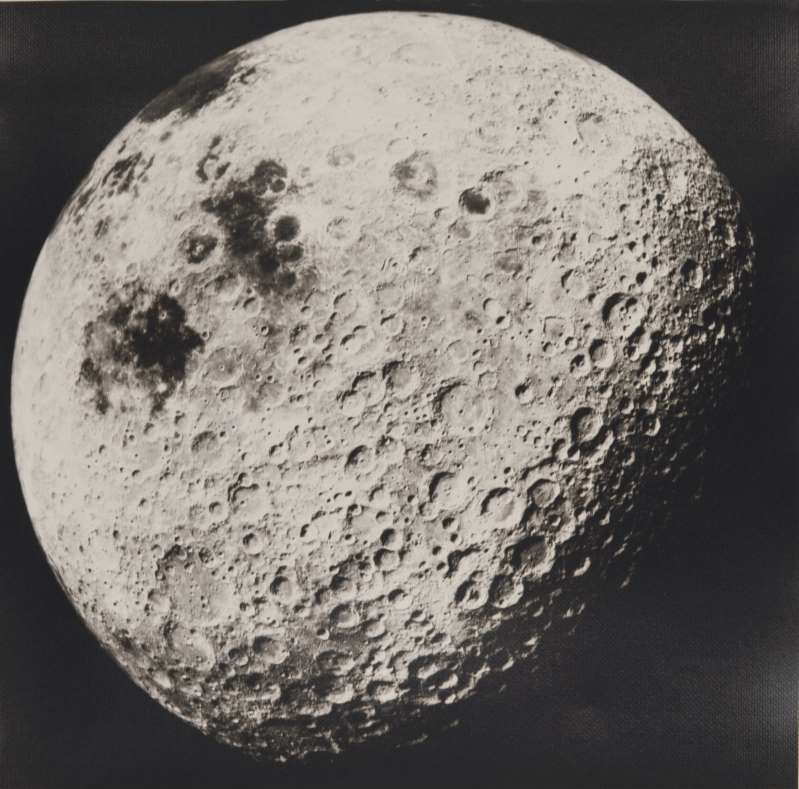
The Moon, photographed during NASA's Apollo 16 lunar landing mission, April 1972.

How often should we shower, according to science?

The internet (like Siri) has become an oracle to which millions of people turn every day hoping to resolve their countless doubts. Google kn...